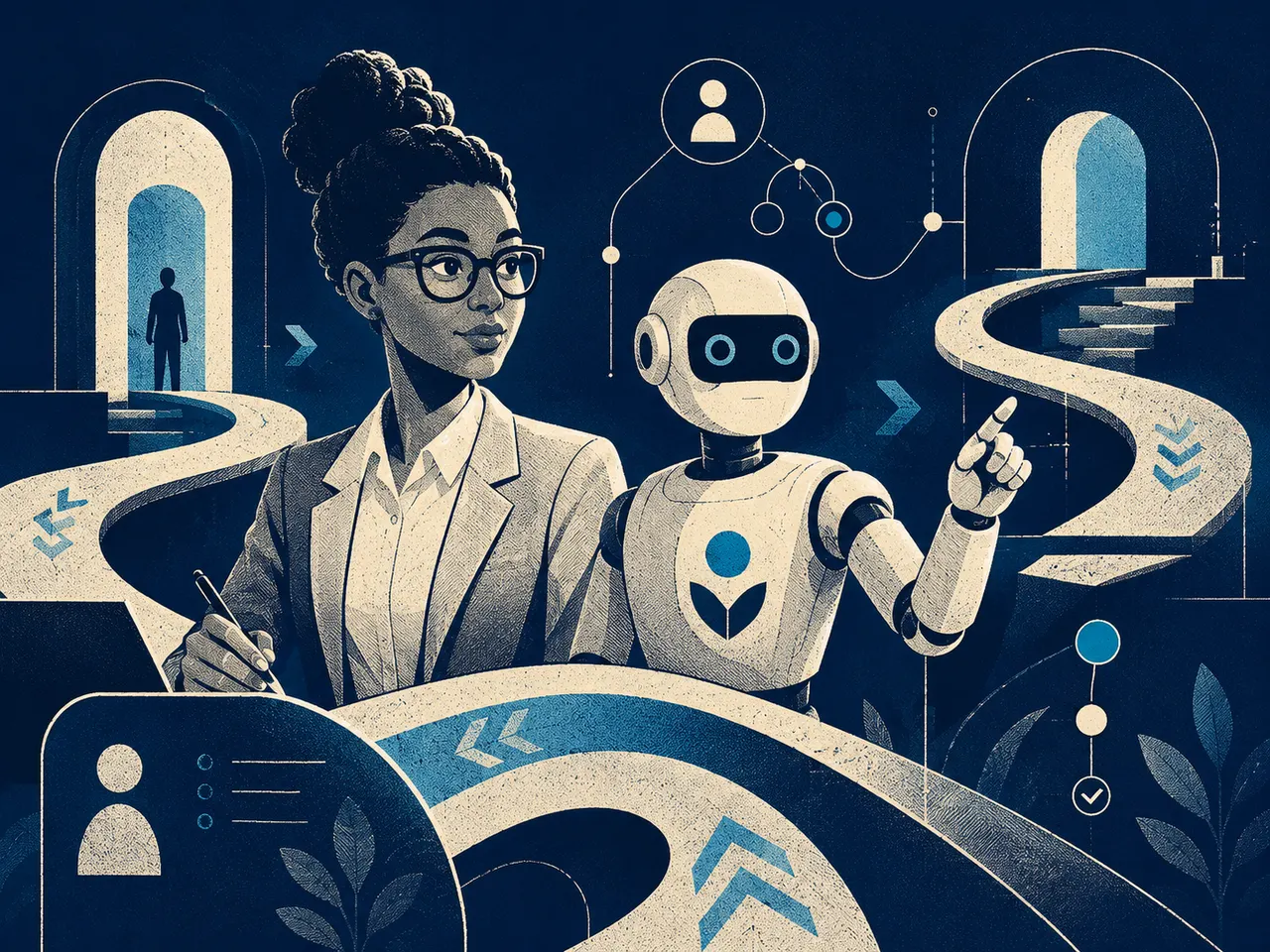
Think your AI assistant is just scheduling meetings? Think again. As we deputize AI agents to manage our digital lives—from setting up smart lightbulbs to handling corporate data—the line between 'who you are' and 'how you stay safe' has vanished. Explore why the merger of the cybersecurity and identity industries isn't just a trend—it's the only way to survive the 'Identity-pocalypse.
You: Do I really need to create an account just to set up a new lightbulb!?
Me: Yeah, sorry…
AI Agent: Just did it for you, you're welcome
AI agents will be more integrated to work on your behalf, removing the trivial frustration with running your digital life. Things will get easier, but with this great shift, comes an even bigger implication. And if Palo Alto's acquisition of CyberArk, CrowdStrike's acquisition of Signl, and Okta's evolving motto tells us something, it is that: identity and security are one and the same.
Ok, actual blog start here >> For years, cybersecurity and identity management have coexisted as distinct, albeit related, disciplines. Cybersecurity focused on fortifying the perimeter, defending against malware, and detecting intrusions. Identity management, in its various forms like Identity and Access Management (IAM) and Customer Identity and Access Management (CIAM), ensured that the right people had the right access to the right resources.
But the landscape as we know it is undergoing a radical transformation, fueled by the accelerating adoption of agentic AI. As agents gain access to our data, automate tasks on our behalf, and interact with an ever-expanding array of digital services, the traditional lines between identity and security are blurring at an alarming rate. In fact, they're not just blurring – they're merging.
The Widening Attack Surface: Your Agent, Your Vulnerability
The most significant vector for data breaches has long been identity-related. Phishing attacks, social engineering, and account takeovers are prime examples of how bad actors exploit human vulnerabilities to gain unauthorized access. Now, imagine those vulnerabilities amplified by AI agents acting on our behalf.
Consider an AI assistant tasked with managing your emails, scheduling appointments, and even making purchases. While incredibly convenient, this agent now holds the keys to a treasure trove of personal and professional information. If this agent is compromised, the impact could be far more extensive than a single account takeover. The agent, in essence, becomes a highly sophisticated attack proxy, capable of executing malicious actions across multiple platforms with the user's implicit trust. The attack surface doesn't just widen; it becomes deeply integrated.
Identity: A Unifying Solution
To effectively combat this evolving threat landscape, enterprises, mid-sized organizations, and even small businesses must recognize a fundamental truth: to solve security, you must solve identity. Identity is no longer just about granting access; it's about establishing trust, verifying authenticity, and continuously monitoring the behavior of users and, critically, their AI agents.
This isn't a speculative future, the industry itself is reflecting this convergence:
CrowdStrike's Acquisition of Signl: The cybersecurity giant CrowdStrike, renowned for its endpoint protection and threat intelligence, recently acquired identity protection startup Signl. This move is a clear signal that leading security vendors understand that protecting endpoints is incomplete without robust identity security.
Palo Alto's Acquisition of CyberArk: This deal is a watershed moment because Palo Alto Networks is the archetypal "infrastructure security" company (firewalls and network security), while CyberArk is the "gold standard" of Identity (specifically Privileged Access Management). Their merger effectively declares that you can no longer secure a network without owning the identity layer that governs it.
Okta's Evolving Motto: Okta, a pioneer in identity management, has subtly but significantly shifted its messaging. While always focused on secure access, their current branding frequently emphasizes phrases like "secure identity" and "secure access." This reflects a broader industry understanding that identity is inherently a security function.
These examples are just the tip of the iceberg. We're seeing a trend where identity solutions are incorporating more advanced threat detection capabilities, while security platforms are integrating deeper identity context into their analytics.
Identity as the Core of Digital Strategy
Ultimately, identity is not just a security imperative; it's a cornerstone of digital growth and customer experience.
Connecting Customers to Products (Growth): A seamless and secure identity experience is crucial for customer acquisition and retention. If your customers struggle with login processes or fear for their data, they will churn. A strong identity foundation fosters trust, encourages engagement, and directly impacts your bottom line.
Protecting Data (Security): Beyond the customer experience, robust identity management is the primary defense against data breaches involving customer and employee information. It ensures that only authorized entities can access sensitive data, mitigating regulatory risks and reputational damage.
Agentic AI requires rethinking the fragmented approach of treating identity and cybersecurity as separate entities. The future is both converged into thinking more holistically, but at the same time more complex as new technologies and services are created.
At Last, Proactive Security!
Talk to any security expert and they will tell you that it is easier to justify the budget for business drivers than it is 'what ifs.' In other words, businesses spend more money on getting more business than they do on preventing attacks. Security doesn't get attention until something happens (either to your business or a close comparison). So the silver lining to the convergence of identity and security is that there is not a single bigger contributor to accelerating growth while preventing loss (reputation, fines, mitigation).
The "Identity Crisis" is Real (and Coming for Your AI)
If you've made it this far, your "Call to Action" is simple: Awareness. For years, "Cybersecurity" was the easy one to explain—it's the digital equivalent of a deadbolt and a guard dog. But "Identity" has been a bit more nebulous. Usually, it just meant "that annoying prompt that asks for my password again."
But as we start deputizing AI agents to move our money, read our emails, and sign our digital lives away, "Identity" is no longer just a login screen. It's the digital DNA that proves you (or your bot) are actually allowed to be in the room. If cybersecurity is the wall, identity is the fingerprint scanner on the only door left.
So, as you start automating your life with AI, ask yourself: What does my digital assistant have access to? It's time to stop treating Identity like a back-office IT ticket and start treating it like the VIP of your security strategy.
What's your plan for the Identity-pocalypse? Are you tightening the leash on your AI agents, or just hoping for the best? Let's argue discuss it in the comments
— Nate Szytel, CEO, Next Reason