Migration Portal
Documentation, templates, scripts, and references that carry a migration from planning through decommission.

The platform behind every migration we run. Years of CIAM delivery expertise encoded into an AI-driven platform that does the heavy lifting that used to need a senior engineer at a console: schema mapping, sync queues, normalize-transform-load across platforms, failure recovery, and JIT-versus-phased cutover orchestration.
Book an advisory call →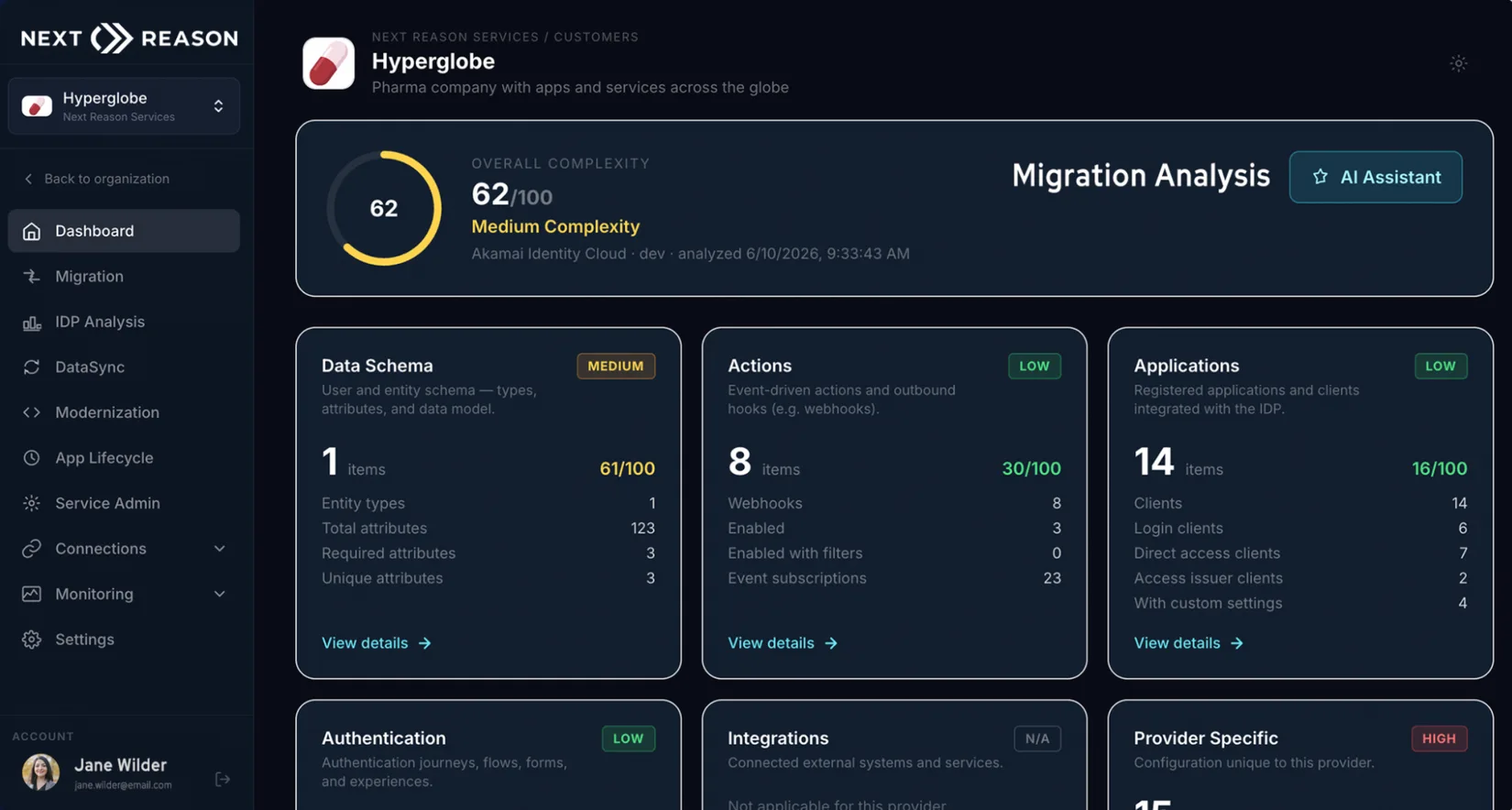
The Toolkit scores overall complexity and breaks the migration down across data schema, actions, applications, authentication, integrations, and provider-specific configuration, so the team knows where the risk is before cutover begins.
Each part of the Toolkit carries a migration through a distinct phase — from planning to real-time sync to decommission.
Documentation, templates, scripts, and references that carry a migration from planning through decommission.
A bridge that centralizes integration points so the migration happens behind the scenes, without disrupting the systems that depend on identity.
Listens for webhooks and synchronizes data into the target platform in real time. Almost always required for phased cutovers.
Run by our engineers, with success/fail reporting, schema mapping, and delta cleanup so no record is left behind.
Enterprise CIAM services carry risk that scales with complexity. Across millions of user identities, dozens of connected applications, changing regulatory requirements, and downstream dependencies, the Next Reason AI Toolkit delivers a service that is consistent, efficient, and free of human error.
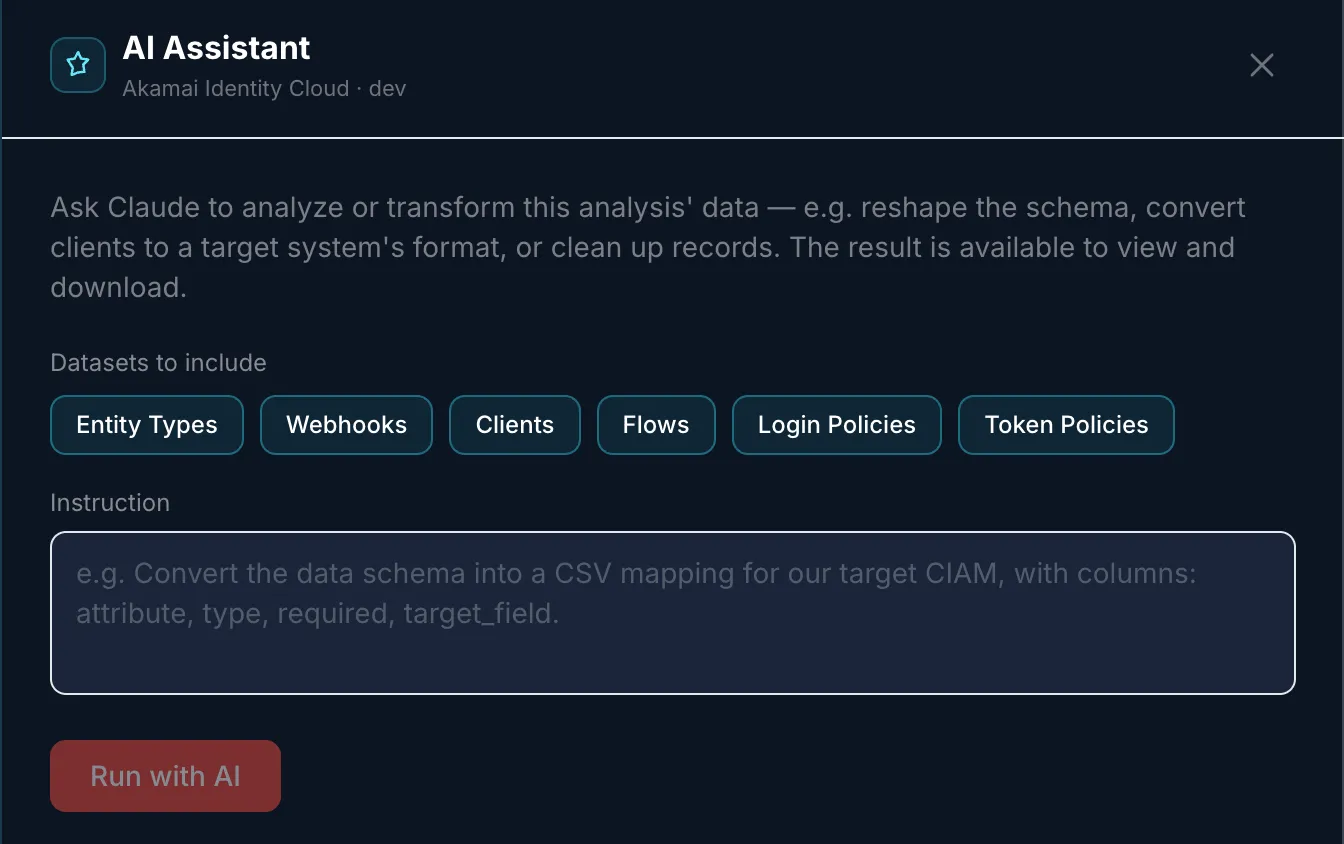
The Next Reason AI Toolkit encodes what we've learned from migrating millions of identities — schema differences, transform edge cases, data integrity validation, sync monitoring, and authentication method mapping — into reliable, repeatable processes. AI here isn't a chatbot bolted on the side.
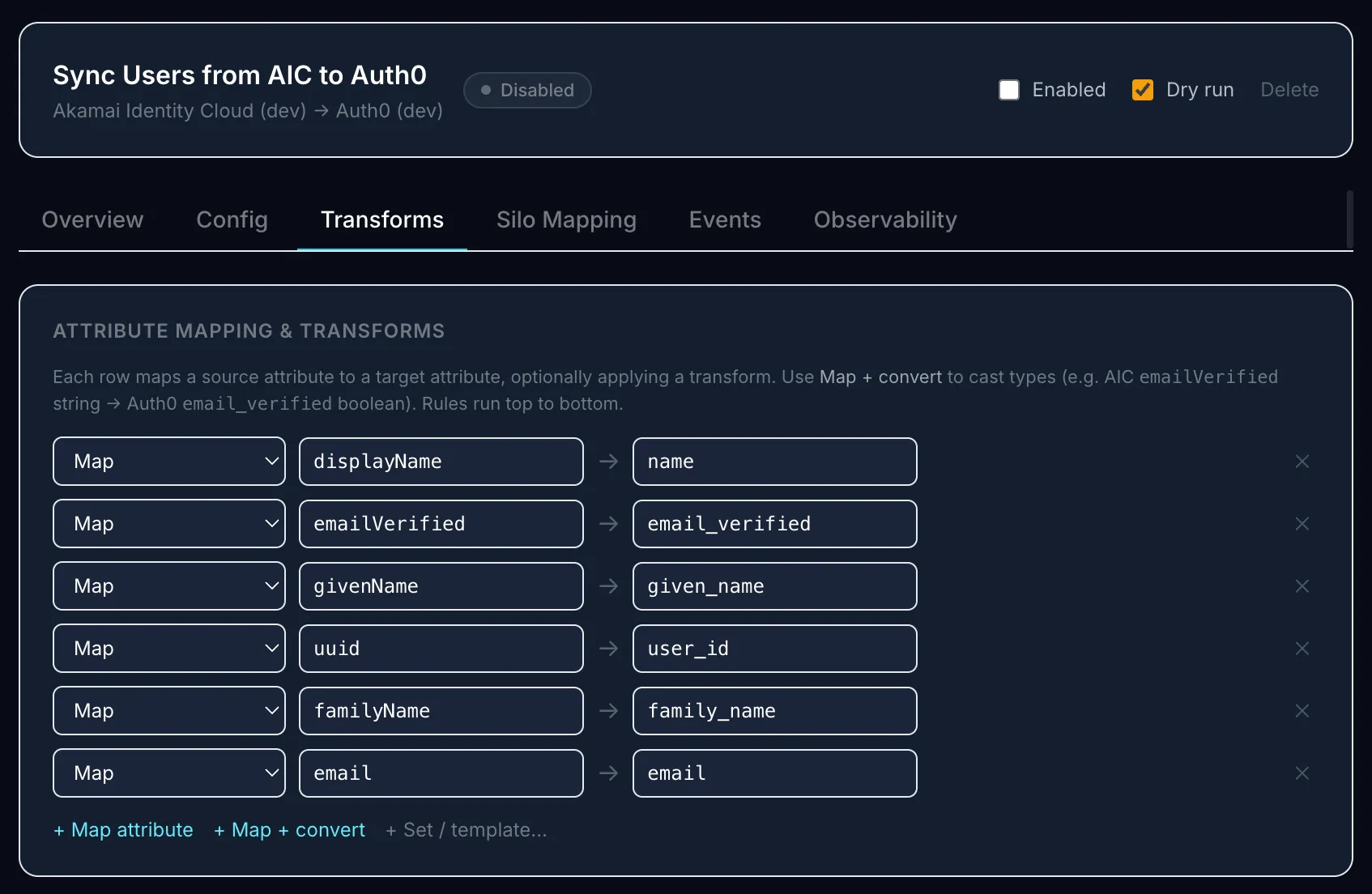
Identity schemas differ between platforms. The Next Reason AI Toolkit handles the mapping and the transform rules, including the edge cases that quietly break downstream integrations at go-live.
The Toolkit's schema mapping and sync engine are platform-agnostic. We run migrations in both directions across the platforms we're credentialed on, and the systems teams are moving off of.




Every environment is different. The Toolkit supports each approach and the orchestration to run them safely.
Secure export of all user data from legacy systems and import into a new provider with a single cutover event. Best for short timeframes, few centrally-managed integrations, or where brief login unavailability is acceptable. Rarely practical on its own for complex enterprise environments.
Real-time one-by-one migration behind the scenes as each user authenticates. Best for longer timeframes with two systems running in parallel. Doesn't solve for dormant accounts, pre-migration data dependencies, or consent records needed in the target before cutover.
Legacy and target CIAM platforms run simultaneously with real-time sync. Applications migrate one at a time, each cutover isolated and independently validated. If application #7 breaks, #1–#6 are already live on the new platform and everything else stays on the old one.
Years of real enterprise migrations encoded as runtime decision support, schema pattern recognition, and proactive issue flagging, so the platform catches the things experts used to catch.
Continuous bidirectional sync between legacy and target platforms throughout the entire migration. Both systems remain live and consistent at all times.
See exactly what's been synchronized, what's queued, and what needs attention at any point. Integrates with your existing observability stack.
Deploy to any region with a single push. Critical for enterprises with data residency requirements or users distributed across jurisdictions.
Automatic failure handling ensures no records are lost during sync. Queued failures are retried and logged for review without blocking the migration.
For systems that will never fully migrate, the Next Reason AI Toolkit can keep running beyond the migration itself, keeping legacy systems in sync with the new platform indefinitely.
Knowing how identity schemas map between platforms, where the edge cases hide, which transform rules break downstream integrations, and how to structure a phased rollout that respects your operational reality — that intelligence used to live in expert heads. Now it lives in the platform itself, behind every migration we run.